
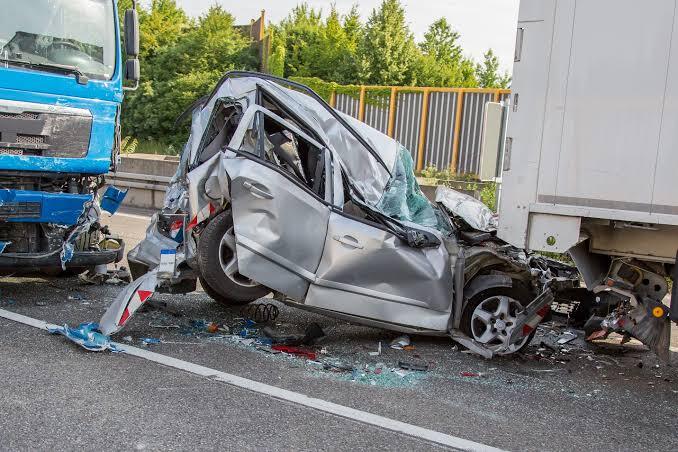
A Missouri truck accident claim can involve many of the same negligence and damages issues as a car accident claim, but the investigation may be very different. Commercial trucking can introduce additional potentially responsible parties, federal safety regulations, electronic data, driver and maintenance records, and commercial insurance considerations that may not exist in an ordinary car accident claim.
A truck accident isn’t simply a car accident involving a bigger vehicle.
At the scene, the immediate questions may look similar: What happened? Who caused the collision? Who was hurt?
But once the investigation begins, a commercial truck can introduce another layer of questions.
Who owned and operated the truck? Was the driver working for a motor carrier? How long had they been driving? When was the truck inspected? What electronic information exists? Could records held by the trucking company help explain what happened before the collision?
That’s where the two types of claims can begin to look very different.
Is a Truck Accident Claim Really Different From a Car Accident Claim?
Potentially, yes.
Both claims can require evidence of fault, causation, injuries and damages. The difference is often how far the investigation needs to go.
| Issue | Car Accident Claim | Commercial Truck Accident Claim |
| Potentially responsible parties | Often focuses on drivers and vehicle owners | May also involve a motor carrier, vehicle owner, maintenance provider or other parties, depending on the facts |
| Evidence | Police report, photos, witnesses, vehicle information and medical records | May additionally include electronic logs, driver records, inspection and maintenance records and company information |
| Safety rules | Primarily state traffic and safety laws | State law plus potentially applicable federal motor-carrier regulations |
| Insurance | Applicable personal or commercial auto coverage | Certain commercial carriers are subject to federal financial-responsibility requirements |
| Investigation | Often focuses heavily on the collision and drivers | May extend into the truck, driver, carrier and events preceding the collision |
A truck accident claim isn’t automatically more valuable or more complicated.
It can simply contain more layers that need to be investigated.
1. There May Be More Than One Responsible Party
After a typical two-car collision, one of the obvious questions is:
Which driver caused the accident?
We ask that after a truck accident too. We just may not stop there.
Depending on the circumstances, an investigation may need to consider the conduct of:
- The truck driver
- The motor carrier or trucking company
- The owner of the truck or trailer
- A company responsible for inspection, repair or maintenance
- Parties involved in loading or securing cargo
- Other drivers or entities whose conduct contributed to the crash
That doesn’t mean all these parties are responsible every time a commercial truck crashes.
It means the investigation should be broad enough to determine who actually played a role.
If a truck couldn’t stop properly, for example, the question isn’t necessarily only what the driver did. Investigators may need to determine whether there was a mechanical problem, whether it had previously been identified and who was responsible for maintaining the vehicle.
The goal isn’t to find as many people to blame as possible.
It’s to follow the evidence far enough to understand what actually happened.
St. Louis Truck Accident Lawyer
2. Commercial Trucking Can Add Federal Safety Rules to the Investigation
Commercial trucking can introduce regulations that simply aren’t part of most passenger-car accidents.
One example is hours of service.
For property-carrying commercial drivers subject to federal hours-of-service rules, the Federal Motor Carrier Safety Administration (FMCSA) generally limits driving to 11 hours after 10 consecutive hours off duty and prohibits driving beyond the 14th consecutive hour after coming on duty. A 30-minute break is also generally required after eight cumulative hours of driving without a qualifying interruption. Exceptions and other provisions can apply.
FMCSA — Summary of Hours of Service Regulations
Why could this matter after an accident?
If fatigue is potentially relevant, a commercial truck investigation may have records that help establish how long a regulated driver had been working or driving.
That doesn’t mean exceeding a rule automatically decides liability.
It means the regulatory environment can provide another source of evidence about what was happening before the crash.
3. A Truck Accident Can Leave a Much Bigger Evidence Trail
This may be the most important practical difference.
Both car and truck accident investigations can involve police reports, photographs, witnesses, medical records, vehicle damage and electronic vehicle information.
A commercial trucking case may also involve:
- Electronic logging device (ELD) information
- Driver logs or records of duty status
- Driver qualification and training records
- Inspection records
- Maintenance and repair records
- Cargo or loading information
- Electronic vehicle data
- Dashcam or onboard video
- Relevant company records
- Drug and alcohol testing information where applicable
Not every record will exist or matter in every case.
But here’s the important distinction:
Some of the most useful evidence may never have been in your possession.
Electronic logging devices are a good example. ELDs automatically record driving time and other data for drivers required to use them. FMCSA explains that ELDs can record duty status and, while the vehicle is moving, automatically capture information at specified intervals.
FMCSA — Electronic Logging Devices
You may have photographs from the scene.
You probably don’t have the trucking company’s driver or maintenance records sitting in your glove compartment.
That changes how the accident needs to be investigated.
4. The Trucking Company Itself May Need to Be Investigated
The driver’s actions in the seconds before impact can be important.
But sometimes the relevant questions start earlier.
Depending on the circumstances:
- Was the driver appropriately qualified?
- How long had the driver been working or driving?
- Were applicable hours-of-service requirements followed?
- When was the truck last inspected?
- Had mechanical problems previously been identified?
- What maintenance or repairs had been performed?
- Was cargo appropriately loaded or secured?
- What do relevant company or electronic records show?
These are questions, not accusations.
Sometimes the evidence will show that the collision came down to a driver’s mistake.
Sometimes it may lead further.
The point is to find out which.
5. Truck Accident Insurance Can Be Different Too
There’s a shortcut we don’t like in truck accident advertising:
Big truck = big insurance policy = big settlement.
That’s not how claim value works.
Commercial motor carriers can, however, be subject to financial-responsibility requirements that differ from ordinary passenger vehicles.
For example, FMCSA currently lists a $750,000 minimum bodily injury and property damage insurance requirement for certain for-hire non-hazardous property carriers operating vehicles with a gross vehicle weight rating of 10,001 pounds or more. Other carrier and cargo categories have different requirements, including higher requirements for certain hazardous materials.
FMCSA — Insurance Filing Requirements
That does not mean every truck has the same requirement or that a truck accident claim is automatically worth $750,000.
Available insurance and the value of an injury claim are different questions.
Claim value still depends on the facts, including liability, causation, injuries, damages and applicable coverage.
6. Serious Injuries Can Make the Damages Investigation More Involved
Commercial truck collisions can result in severe injuries.
When they do, determining what happened is only part of the job. The investigation also needs to establish what the injuries have actually cost the person and what they may continue to cost.
Depending on the case, that may include evidence of:
- Medical treatment and surgery
- Rehabilitation and follow-up care
- Lost income
- Reduced ability to work
- Future medical needs
- Assistance with everyday activities
- Permanent limitations
- Pain and the effect of the injuries on daily life
The full impact of a serious injury may not be apparent from the emergency-room records created on day one.
St. Louis Catastrophic Injury Lawyer
For more on the financial and practical consequences that can follow a life-changing injury, see The Hidden Costs of a Catastrophic Injury: What Families Need to Know.
The Hidden Costs of a Catastrophic Injury
What Is the Same About Truck and Car Accident Claims in Missouri?
For all those differences, truck accidents aren’t a different species of personal injury law.
Both types of claims can require evidence establishing:
- Fault
- Causation
- Injuries
- Medical expenses and treatment
- Lost income
- Other damages
- Applicable insurance
Missouri’s comparative-fault principles can also matter regardless of whether the other vehicle was a car or commercial truck.
Missouri follows pure comparative fault. The Missouri Supreme Court adopted that system in Gustafson v. Benda, and subsequent Missouri authority explains that fault attributable to an injured plaintiff proportionately reduces compensatory damages rather than automatically eliminating recovery simply because the plaintiff shares some responsibility.
So if someone argues that you contributed to the collision, the question isn’t necessarily:
“Does that mean I have no claim?”
The evidence needs to establish how responsibility should be allocated.
For more on shared responsibility after a Missouri accident, see Who Pays When More Than One Driver Is at Fault in a Missouri Car Accident?
Who Pays When More Than One Driver Is at Fault in a Missouri Car Accident?
What Should You Do After a Missouri Truck Accident?
The immediate priorities after any serious crash are safety and appropriate medical care.
Once those immediate needs are addressed, there are several practical considerations.
1. Get Appropriate Medical Care
Your health comes first. Injuries aren’t always fully apparent at the scene, and medical records can also become important evidence of what was identified and how your condition developed.
2. Preserve What You Have
Keep photographs, video, witness information, medical paperwork, correspondence and other records connected to the collision.
3. Don’t Assume the Driver Is the Only Relevant Party
Depending on what happened, the investigation may need to extend to the carrier, truck ownership, maintenance, cargo or another contributing factor.
4. Understand What You’re Being Asked to Sign or Say
If an insurer or another party asks for a broad recorded statement or document, understand who is asking, what information they want and what you’re agreeing to.
5. Consider the Evidence You Don’t Have
This is the big one.
After a car accident, preserving your evidence matters. After a truck accident, identifying relevant evidence held by other people and companies can matter just as much.
What We’ve Learned From Investigating Serious Vehicle Accidents
The first version of a serious crash isn’t always the complete version.
A police report matters, but it is one part of the evidence.
Witnesses may add information. Medical evidence develops. Photographs and vehicle information may help explain the collision.
And in a commercial truck case, driver, vehicle and company records may add another layer that isn’t present in many passenger-car accidents.
That’s why the question isn’t:
“How complicated can we make this claim?”
It’s:
“What evidence exists, and where does it lead?”
If it leads only to a driver’s mistake, that’s important.
If it leads further into driver hours, maintenance, cargo, company records or another party’s conduct, that’s important too.
The goal isn’t to make the investigation bigger.
It’s to make it complete.
Do I Need a Truck Accident Lawyer Instead of a Car Accident Lawyer?
The label matters less than whether the attorney understands what needs to be investigated.
A commercial truck accident may require looking beyond the collision itself to determine:
- What trucking and electronic records may exist
- Which regulations may apply
- Who owned and operated the vehicle
- Who maintained it
- Whether other potentially responsible parties need to be investigated
- What insurance applies
- What evidence is needed to document the injuries and losses
A lawyer shouldn’t assume a trucking company is responsible simply because its truck was involved.
But they also shouldn’t investigate a commercial truck collision as though it were an ordinary two-car fender bender.
If you were injured in a commercial truck collision in St. Louis or elsewhere in Missouri, Roach Law can review what happened and help identify what needs to be investigated.
St. Louis Truck Accident Lawyer
Frequently Asked Questions About Missouri Truck Accident Claims
1. Is a Truck Accident Claim Worth More Than a Car Accident Claim?
Not automatically.
The type of vehicle does not determine the value of an injury claim. Relevant factors can include liability, the nature and severity of the injuries, medical treatment, lost income, future effects, other recoverable damages and applicable insurance.
2. Can I Sue the Trucking Company After a Truck Accident in Missouri?
Potentially, depending on the circumstances.
A trucking company isn’t automatically responsible simply because one of its trucks was involved. Liability depends on the facts, the relationships between the parties and the conduct that contributed to the collision.
3. What Evidence Should Be Investigated After a Truck Accident?
In addition to police reports, photographs, witnesses and medical records, a commercial truck case may involve electronic logs, driver records, inspection and maintenance records, electronic vehicle data, company records, cargo information or onboard video where those records exist and are relevant.
4. What if I Was Partly at Fault for the Truck Accident?
Being partly responsible does not necessarily prevent recovery in a Missouri negligence case.
Under Missouri’s pure comparative-fault system, compensatory damages can be reduced in proportion to fault attributed to the injured claimant.
Who Pays When More Than One Driver Is at Fault in a Missouri Car Accident?
5. How Soon Should a Missouri Truck Accident Be Investigated?
There isn’t one universal evidence-preservation deadline covering every type of record in every truck accident.
Different records can have different retention requirements, and some evidence may change, be overwritten or become harder to locate over time.
The practical priority is to identify potentially important evidence early enough to determine what exists and what steps may be appropriate to preserve it.
A Truck Accident Claim Deserves More Than a Bigger Version of a Car Accident Investigation
The biggest difference between a car accident and a commercial truck accident may not be what happened at impact.
It may be everything that happened before it.
Who was driving? For whom? For how long? What condition was the truck in? Who maintained it? What records exist? What does the electronic evidence show?
Not every truck accident will produce complicated answers.
But those questions help make sure a simple explanation isn’t accepted before the evidence has had a chance to tell the rest of the story.
If you were injured in a truck accident in St. Louis or elsewhere in Missouri, Roach Law can investigate what happened, identify the evidence that may matter and help you understand your options.